

Basel Ali
UX / UI Designer

Let’s turn your idea into
a great product.


Basel Ali
UX / UI Designer
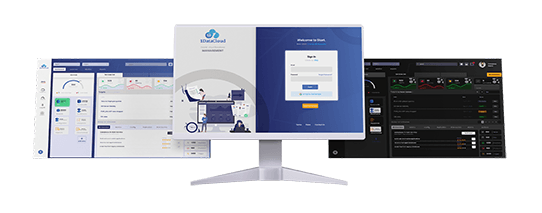
A SaaS dashboard designed for 1Data Cloud, a Canadian cloud services company, to manage and monitor hybrid-cloud database environments. The platform provides IT administrators and data engineers with real-time visibility into database health, performance metrics, and infrastructure usage across on-premise and cloud deployments.
This phase focused on understanding the complex operational needs of IT administrators and data engineers managing hybrid-cloud database environments — mapping monitoring workflows, identifying visibility gaps, and establishing the requirements for a control dashboard that serves technical expert users.
Provide real-time visibility into hybrid-cloud database health
Design a unified dashboard that surfaces live performance metrics, health indicators, and alerts across all connected databases.
Centralize monitoring for on-premise and cloud deployments
Enable IT teams to monitor and manage both on-premise and cloud databases from a single interface without switching tools.
Surface actionable performance metrics and usage insights
Present infrastructure usage, query performance, and capacity data in a way that enables fast, informed operational decisions.
Support multi-cloud environment management
Design for environments spanning multiple cloud providers alongside on-premise infrastructure — with consistent visibility across all.
Design for technical expert users
Create a high-density, data-rich interface appropriate for IT administrators and data engineers with deep technical domain knowledge.
Enable proactive alert and incident management
Provide configurable alerting and anomaly detection that allows teams to identify and respond to issues before they impact services.
1Data Cloud Product Leadership
Strategy sessions with 1Data Cloud leadership to align dashboard design with the platform's product vision and competitive positioning.
IT Administrator User Research
In-depth interviews with IT admins to understand database monitoring workflows, alert management needs, and current tool frustrations.
Data Engineer Interviews
Sessions with data engineers to capture query performance visibility needs, capacity planning workflows, and data pipeline monitoring requirements.
Technical Architecture Review
Collaborative sessions with the engineering team to understand API capabilities, data refresh rates, and infrastructure visualization constraints.
Existing Monitoring Tool Benchmarking
Analyzed leading cloud monitoring platforms (Grafana, Datadog, AWS CloudWatch, Azure Monitor) to identify UX patterns and capability gaps.
Hybrid-cloud Tooling Gap Analysis
Identified specific usability and feature gaps in existing tools when applied to hybrid-cloud (on-premise + cloud) database environments.
Database Dashboard UX Pattern Research
Reviewed best practices in data-dense technical dashboard design — metric visualization, alert management, and drill-down navigation.
Technical User Mental Model Analysis
Documented how IT admins and data engineers mentally model their database infrastructure to inform information architecture decisions.
IT Administrator
Responsible for the health and uptime of the full database fleet across on-premise and cloud deployments. Needs rapid fleet-level visibility and fast drill-down capability during active incidents.
Data Engineer
Manages query performance, data pipeline health, and capacity planning. Needs granular performance metrics, trend visualization, and the ability to correlate anomalies across time and environments.
Platform Operations Manager
Oversees the IT operations team and infrastructure cost performance. Needs high-level fleet health reporting, incident frequency trends, and resource utilization summaries for leadership review.
On-call Engineer
Responds to critical system alerts outside business hours. Needs an immediately focused incident view surfacing alert severity, affected databases, and recent infrastructure changes without navigation overhead.
I follow a user-centered, iterative design process to ensure solutions are both functional and delightful. The work is guided by five consistent core stages: