

Basel Ali
UX / UI Designer

Let’s turn your idea into
a great product.


Basel Ali
UX / UI Designer

DMEP is a large-scale ERP system designed for the Sharjah Municipality to manage and automate internal enterprise operations. The system covers human resources, financial management, procurement, and project tracking, unifying previously siloed departmental tools into one cohesive digital platform.
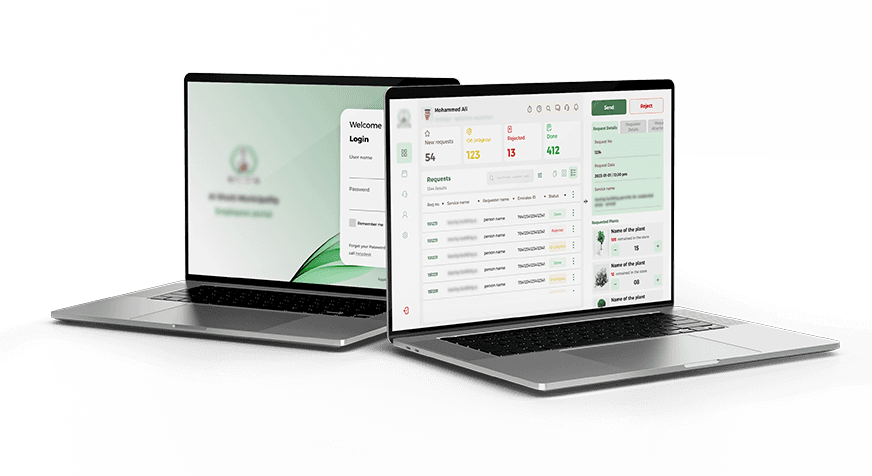
This phase focused on understanding the operational needs of Sharjah Municipality's internal teams across HR, finance, procurement, and project management — mapping existing workflows, identifying inter-departmental inefficiencies, and establishing the requirements for a unified ERP experience.
Unify siloed departmental tools into one ERP platform
Replace fragmented department-specific tools and spreadsheet workflows with a single, integrated enterprise resource planning system.
Cover HR, finance, procurement, and project management
Design a multi-module ERP covering the four core operational domains of the municipality in a cohesive, consistent interface.
Enable role-based access across departments
Support distinct user roles for department staff, managers, and administrators with appropriate data visibility and permissions.
Reduce inter-departmental data silos
Enable data sharing and workflow handoffs between departments to eliminate duplicate data entry and miscommunication.
Enable management reporting and analytics
Provide leadership with real-time dashboards and reporting tools to monitor operational performance across all departments.
Design for scalability across growing departments
Build a flexible design system that can accommodate new departments, modules, and users as the municipality expands.
HR Department Sessions
In-depth interviews with HR staff and managers to understand employee management, recruitment, leave tracking, and payroll workflow needs.
Finance Department Interviews
Sessions with finance team members to capture budget tracking, expense approval, financial reporting, and audit trail requirements.
Procurement Team Research
Interviews with procurement officers to map the vendor management, purchase order, and approval workflows.
Project Managers & Supervisors
Sessions with project management staff to understand task tracking, resource allocation, and milestone reporting needs.
IT Administration Review
Technical sessions with IT administrators to capture system integration, data security, and infrastructure requirements.
Municipal Leadership Alignment
Strategy sessions with executive leadership to align ERP module priorities with organizational transformation goals.
Departmental Tools Audit
Systematic review of all currently used tools, spreadsheets, and legacy systems across HR, finance, procurement, and project management.
Process Mapping per Department
Documented the core workflows for each of the four ERP domains — mapping steps, decision points, and inter-departmental handoffs.
Data Handoff Pain Point Analysis
Identified where data is manually transferred between departments, causing delays, errors, and duplication.
Workflow Redundancy Analysis
Pinpointed redundant steps and approval bottlenecks across departmental processes that the ERP redesign should eliminate.
HR Staff Member
Responsible for managing employee records, processing leave requests, and coordinating recruitment workflows. Needs efficient data entry and real-time process status visibility.
Finance Officer
Manages budget tracking, expense approvals, and financial reporting across departments. Requires accurate data aggregation, clear approval chains, and a complete audit trail.
Procurement Officer
Handles vendor management, purchase order creation, and approval routing. Needs a structured step-by-step workflow with clear status tracking for all active purchase requests.
Department Manager / Executive
Oversees operational performance across multiple departments. Requires high-level cross-department dashboards and reporting tools for strategic workforce and budget decisions.
I follow a user-centered, iterative design process to ensure solutions are both functional and delightful. The work is guided by five consistent core stages: