

Basel Ali
UX / UI Designer

Let’s turn your idea into
a great product.


Basel Ali
UX / UI Designer

CCMS is one of the UAE government's most sensitive, confidential, and complex digital initiatives. It is a specialized ERP system designed to support judicial and legal services by managing both primary and secondary events across the sector. The original system was built using legacy Oracle Forms technology. The client required a full redesign to transform the outdated interface into a modern, intuitive, and user-friendly experience—while preserving the original system logic, workflows, and hierarchies. I played a key role in this transformation by deeply analyzing the existing system and building a thorough understanding of the business from the ground up. This case study outlines my contributions to reimagining the CCMS platform with a user-centered approach.
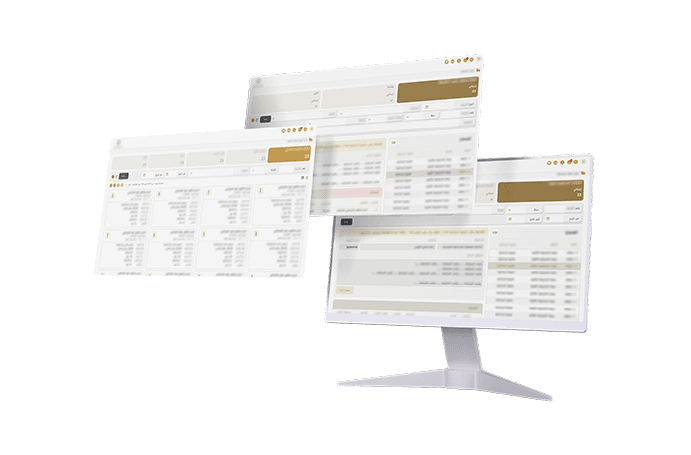
This phase focuses on understanding both of Business and users needs, as well as user needs, behaviors, and pain points through qualitative and quantitative research methods.
Redesign outdated legacy system
Transform the existing Oracle Forms-based system into a modern, user-friendly interface.
Ensure compliance with UAE TDRA guidelines
Align design with official UAE digital government standards for usability and accessibility.
Improve task efficiency and reduce user errors
Streamline workflows to save time and minimize mistakes during data entry and operations.
Maintain business logic and system hierarchy
Preserve the original flow and relationships of events and modules to ensure continuity.
Enable scalability for future service expansion
Design flexible components that support adding features or modules in later phases.
Support role-based access and user permissions
Ensure the system handles multiple user roles securely with proper access levels.
Enhance UI clarity and ease of use
Improve layout and visual hierarchy to make navigation and interaction intuitive.
Ensure system responsiveness across devices
Provide a consistent experience on desktops, tablets, and mobile devices.
Reduce training needs for new employees
Design interfaces that are self-explanatory, reducing onboarding and support time.
Strengthen platform security and data integrity
Integrate secure design patterns that comply with government-grade data protection.
100+ Stakeholder Sessions
In-depth interviews with judges, prosecutors, lawyers, court clerks, and IT administrators across multiple departments.
Leadership Alignment
Strategy sessions with department heads to align the design direction with organizational goals and vision.
Technical Constraints Discovery
Sessions with the development team to surface technical limitations, backend dependencies, and integration points.
End-User Context Research
Observational sessions with daily users to capture real workflows, workarounds, and unvoiced frustrations.
Cross-department Mapping
Identified handoff points and communication gaps between departments affecting case management efficiency.
Priority Validation
Validated feature priorities with stakeholders to ensure alignment before moving into ideation and design.
Oracle Forms Audit
Systematic review of all existing Oracle Forms screens, data entry patterns, navigation flows, and module dependencies.
Heuristic Evaluation
Expert UX review against Nielsen's 10 usability heuristics—identified 60+ issues categorized by severity.
Core Workflow Mapping
Documented 200+ critical workflows and mapped data dependencies and handoffs between system modules.
Pain Point Taxonomy
Categorized usability issues by type (navigation, data entry, feedback, error handling) and impact severity.
Competitive Benchmarking
Analyzed modern legal and government ERP systems to identify best practices and benchmark usability standards.
Legacy Constraint Inventory
Documented constraints that must be preserved due to legal, regulatory, or technical dependencies.
5 Core User Personas
Data-driven personas for: Presiding Judge, Public Prosecutor, Defense Lawyer, Court Clerk, and Department Manager.
Top 10 Journey Maps
End-to-end journey maps for the 10 most critical case management workflows highlighting key pain points.
Pain & Gain Analysis
Documented friction points and desired outcomes for each persona across their primary daily tasks.
Mental Model Identification
Identified mismatches between user mental models and the legacy system's conceptual organization and terminology.
I follow a user-centered, iterative design process to ensure solutions are both functional and delightful. The work is guided by five consistent core stages: